
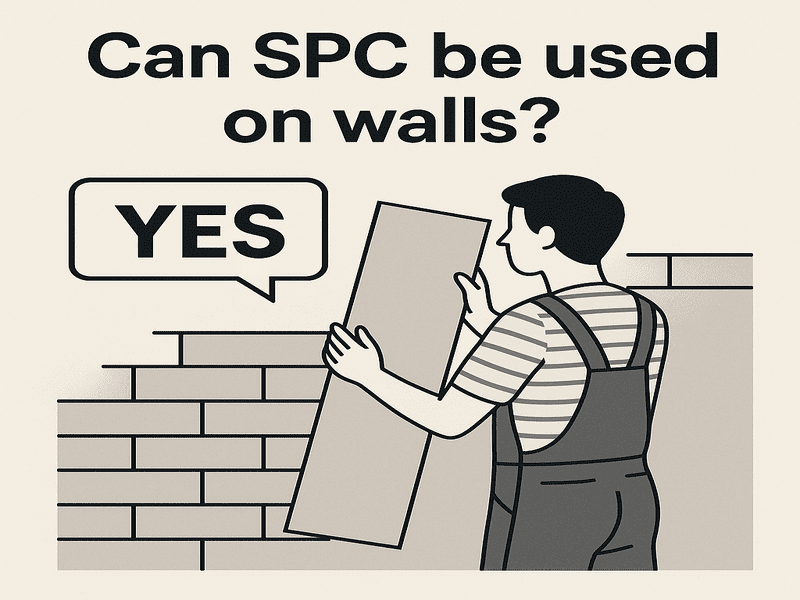
Yes, Since 2021, Trioflor has been exploring how to put SPC flooring on the wall. Driven by this innovative idea, the company successfully developed and launched the SPC Wall Panel.
What is SPC
The full name of SPC is Stone Plastic Composite. It is mainly used for flooring and is widely applied in both commercial and residential interior decoration fields.
What is SPC Wall Panel
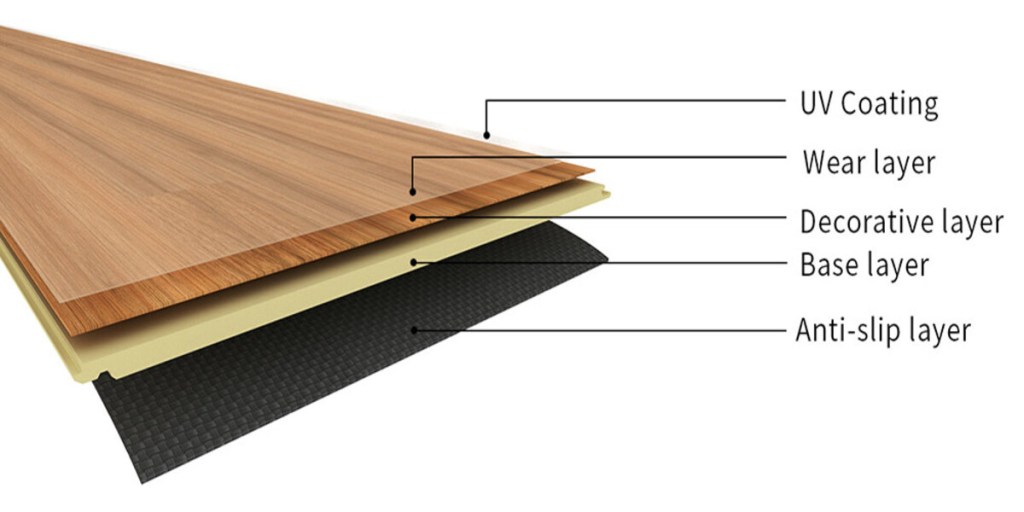
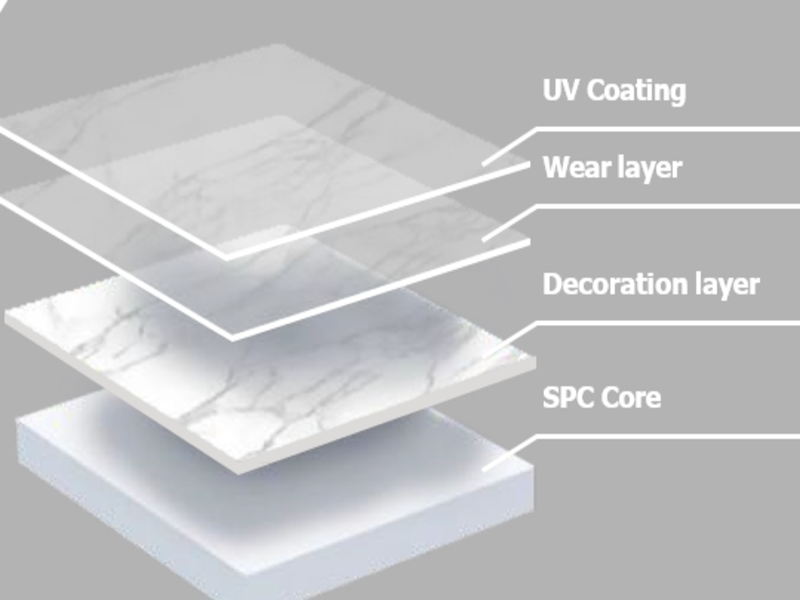
SPC Wall Panel (Stone Plastic Composite Wall Panel) is a durable, lightweight interior wall cladding made primarily of PVC resin and calcium carbonate. The panels feature a laminated SPC core, decorative layer, wear layer, and UV coating, with a click-lock system for easy, waterproof, DIY installation. They are widely used as a modern alternative to traditional tiles, especially in wet areas like bathrooms.
7 Difference between SPC Wall Panel and SPC flooring
1. Material Ratio
In SPC wall panels, the ratio of PVC to calcium carbonate is 1:3.0, compared to 1:3.3 in SPC flooring. This slightly higher PVC content makes the panels softer and more flexible.
2. Overall Thickness
The thickness of SPC flooring ranges from 3.2mm to 7.0mm, depending on foot traffic and project requirements. Different environments call for different thicknesses. However, since wall panels do not bear loads, a thickness of 3.7mm offers the best balance of cost-effectiveness and dimensional stability.
3. Wear Layer Thickness
SPC flooring needs to withstand foot traffic and surface friction, which is why the wear layer typically ranges from 0.2mm to 0.7mm, depending on the specific application. In contrast, SPC wall panels are not exposed to friction, so a 0.1mm wear layer is sufficient to meet durability requirements.
4. Density
Due to the different material ratio, SPC wall panels have a lower density of 2.0 kg/m²/mm. Combined with a thickness of only 3.7mm, the actual weight per square meter is approximately 7.4 kg/m².
5. Surface Emboss
The surface treatment of SPC flooring typically includes BP Embossed or EIR (Embossed in Register) technology to make the texture closely resemble natural wood. In contrast, SPC wall panels are mainly used in bathrooms as a modern alternative to tiles. Therefore, their designs focus more on a contemporary look, with common surface processes including CNC Grooving and 3D Printing.
6. Dimension
SPC flooring is typically produced in plank sizes, which closely resemble natural hardwood. In contrast, SPC wall panels come in tile or panel sizes, making them more suitable for easy, DIY installation.
7. Under-Layer
Since SPC flooring is installed on the floor, soundproofing is required, and therefore an underlayer such as IXPE or EVA is added to reduce noise. However, SPC wall panels do not have soundproofing requirements, so no under layer is needed.
Summary of 7 Difference
| Item | SPC Flooring | SPC Wall Panel |
|---|---|---|
| Material Ratio (PVC : CaCO₃) | 1 : 3.3 | 1 : 3.0 |
| Overall Thickness | 3.2 – 7.0mm | 3.7mm |
| Wear Layer Thickness | 0.2 – 0.7mm | 0.1mm |
| Density | 2.1kg/m²/mm | 2.0kg/m²/mm |
| Surface Emboss | UV Coating BP/EIR |
UV Coating CNC Grooving / 3D Printing |
| Dimension | Plank Size: 180×1230mm 228×1230mm |
Tile/Panel Size: 300×600mm 600×2440mm |
| Under-layer | IXPE / EVA | No |
Top 5 Advantages of SPC Wall Panel
1. Water-Proof
The surface of the SPC wall panel is treated with UV coating, and the edges are designed with a click system, ensuring that both the surface and the joints are 100% waterproof.

2. DIY installation
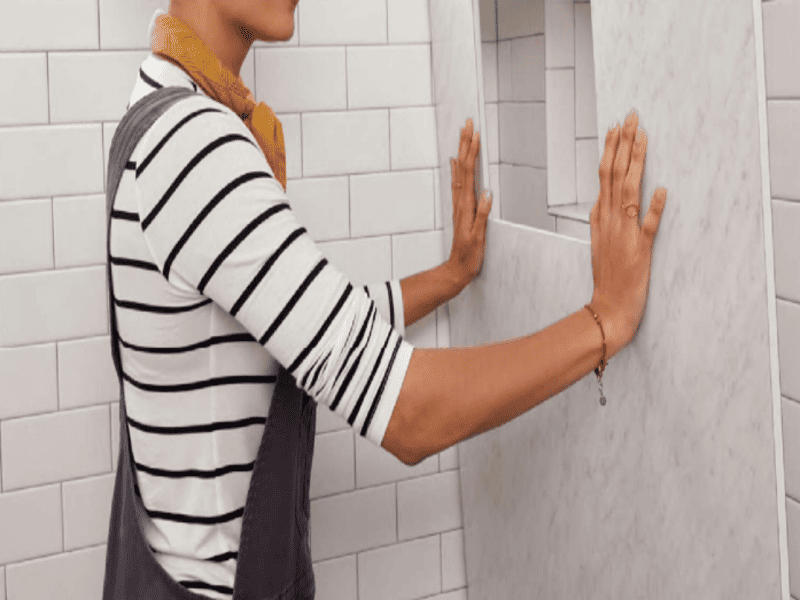
The 300×600mm specification of SPC wall panels features click-lock systems on all four edges. Combined with their lightweight structure, they are ideal for DIY installation.
3. Light-weight
The density of SPC wall panels is only 7.4 kg/m², which is significantly lighter compared to ceramic tiles at 24 kg/m². As a result, transportation costs are much lower.

4. Durable
Thanks to the well-balanced ratio of PVC and calcium carbonate, SPC wall panels offer excellent flexibility and toughness. They are not easily damaged by impacts or accidental drops, making their breakage rate significantly lower than that of ceramic tiles.
5. Eco-friendly
For bathroom renovations, there is no need to remove the existing tiles — SPC wall panels can be installed directly over them. Additionally, the material is fully recyclable, allowing for 100% recycling at the end of its service life.
Shortcoming
Short Lifespan than Tiles
The lifespan of SPC wall panels is around 15 to 20 years, which is not as long-lasting as ceramic tiles.
Plastic Appearance
Compared to ceramic tiles, SPC wall panels have a slight plastic look due to the nature of their material composition.
Conclusion
SPC wall panels were developed based on the concept of SPC flooring, but due to the different requirements for floors and walls, they feature distinct specifications. With their own advantages, including waterproof performance, DIY-friendly installation, environmental sustainability, and lightweight structure, SPC wall panels are an ideal solution for bathroom walls, providing a modern alternative to traditional ceramic tiles


 SPC Wall Panel
Leave a comment