
Why are more and more people choosing WPC or SPC wall panels for interior decoration? What are the unique advantages of each? This article breaks it all down for you.
1. Material Composition Comparison
WPC (Wood Plastic Composite) panels are made from 55% wood powder, 35% HDPE (High-Density Polyethylene), and 10% special additives. This blend gives WPC a warm, wood-like appearance and a softer structure.
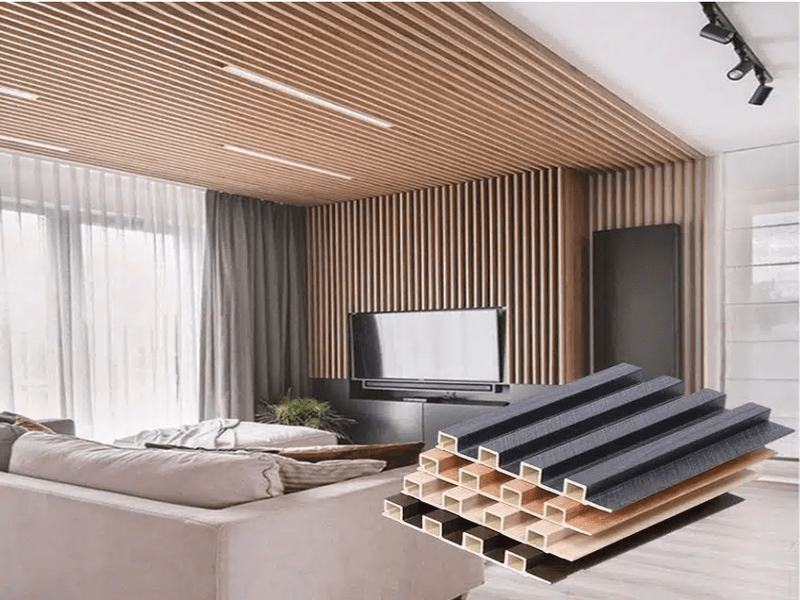
In contrast, SPC (Stone Plastic Composite) panels consist of 63% stone powder, 26% PVC, and 11% plasticizer. The high stone content gives SPC superior rigidity, waterproofing, and fire resistance—making it ideal for both residential and commercial applications.
2. Waterproof Performance
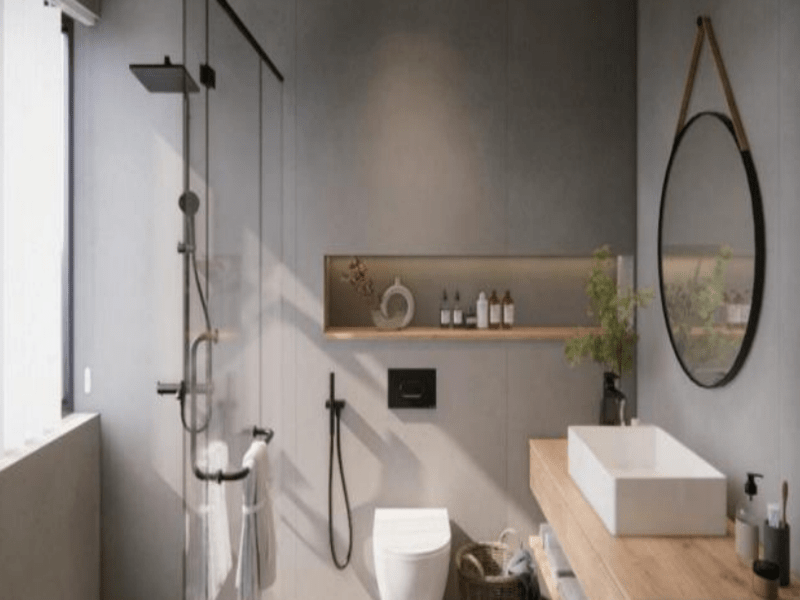
SPC wall panels have excellent waterproof properties thanks to their high stone powder and PVC content, making them ideal for wet areas like bathrooms and kitchens. In contrast, WPC panels contain a large proportion of wood powder, which makes them less resistant to moisture and better suited for dry indoor spaces.
3. Fire Resistance
SPC wall panels offer superior fire-retardant performance, typically reaching a Bf1-S1 fire safety rating—one of the highest standards for interior wall materials. This makes SPC highly suitable for high-safety environments such as kitchens, commercial buildings, and public spaces. In contrast, WPC panels do not meet this level of fire resistance due to their wood content, making them less ideal for areas with strict fire safety requirements. For projects prioritizing flame retardancy, SPC is the safer and more compliant choice.
4. Aesthetic Appeal
WPC wall panels feature a natural wood texture that creates a warm and organic atmosphere, making them ideal for cozy, homey interiors. In contrast, SPC panels offer a sleek, modern appearance with more pattern and color variety, suiting minimalist or industrial-style spaces. The right choice depends on the mood and aesthetic you want to achieve in your environment.
5. Sound Insulation
WPC wall panels offer better sound insulation due to their softer structure, which helps absorb sound and reduce noise transmission—making them ideal for bedrooms, offices, or study areas. In contrast, SPC panels have a denser and harder composition, resulting in only average sound insulation performance. For spaces where acoustic comfort is important, WPC is the more suitable choice.
6. Durability
SPC wall panels have excellent scratch resistance, impact strength, and aging resistance, thanks to their high-density stone composite core. They are less likely to dent or wear down over time, making them ideal for high-traffic or commercial environments. WPC panels, while durable for residential use, are softer and more prone to surface damage under heavy impact or frequent use. Overall, SPC is the better choice for long-term durability and demanding conditions.
7. Installation Convenience
Both WPC and SPC wall panels are convenient to install, making them suitable for quick renovation projects. WPC, being softer, is easier to cut and handle, which is ideal for DIY users. However, SPC panels offer an advantage with their built-in click lock system, allowing for faster and more precise installation—especially in large or professional projects. This feature makes SPC more efficient for installers seeking speed and consistency.
8. Maintenance Effort
WPC wall panels often have a slat-style surface with grooves, which can easily trap dust and require more frequent cleaning. In contrast, SPC panels have a smoother, sealed surface that resists dirt and stains. This makes SPC significantly easier to maintain, especially in environments where hygiene and cleanliness are important. For low-maintenance interiors, SPC is the more practical choice.
9. Application Scenarios
WPC wall panels often have a slat-style surface with grooves, which can easily trap dust and require more frequent cleaning. In contrast, SPC panels have a smoother, sealed surface that resists dirt and stains. This makes SPC significantly easier to maintain, especially in environments where hygiene and cleanliness are important. For low-maintenance interiors, SPC is the more practical choice.
Conclusion & Buying Advice
A concise summary of all key comparisons, ending with practical tips to help readers confidently choose the right wall panel for their specific needs.
WPC vs SPC Wall Panel – Feature Comparison
| Category | WPC Wall Panel | SPC Wall Panel |
|---|---|---|
| Composition | 55% wood powder + 35% HDPE + 10% special additives | 63% stone powder + 26% PVC + 11% plasticizer |
| Process | Extrusion | Extrusion |
| Weight (kg/m²) | Moderate (relatively lighter) | 8.0 |
| Waterproof | Moderate | Good (excellent water resistance) |
| Thickness | Approx. 5–9mm (varies by brand) | 3.7mm (typical) |
| Fire Resistance | Fair (basic flame retardant) | Bf1-S1 (EN 13501-1) |
| Appearance | Natural wood-like texture, warm feel | More industrial/modern look with diverse patterns |
| Sound Insulation | Good (softer structure, better sound absorption) | Average (dense and hard structure) |
| Durability | Decent impact resistance, suitable for household use | Excellent wear and pressure resistance, ideal for high-traffic areas |
| Ease of Installation | Softer material, easier to cut, DIY-friendly | Harder material but supports click-lock system, professional-friendly |
| Maintenance | Moderate – needs care to prevent moisture/stains | Easy – dense surface, stain-resistant, easy to clean |
FAQ
1. Can WPC or SPC wall panels be installed in the bathroom?
SPC wall panels are suitable for bathrooms due to their strong waterproof performance, while WPC panels are not recommended as they are not water-resistant.
2. Are WPC and SPC wall panels suitable for kitchen use?
Yes. SPC panels are ideal for kitchen walls not only because they are water-resistant and easy to clean, but also because they offer a higher fire-retardant rating—making them safer for heat-prone environments. While WPC panels can be used in dry kitchen areas, their lower fire resistance makes them less suitable near stoves or heat sources.
3: Which is better for long-term use in high-traffic or commercial spaces?
SPC wall panels are better suited for high-traffic areas thanks to their superior durability, wear resistance, and impact strength. Compared to WPC, SPC can withstand daily use and pressure more effectively, making it the more reliable choice for demanding environments.

 SPC Wall Panel
Leave a comment