
This article provides a comprehensive comparison between SPC wall panels and acrylic wall panels. It begins with an overview of their materials and manufacturing process, followed by a detailed look at their specifications such as thickness, density, dimensions, and surface treatments. Next, it explores their functional performance, including moisture, waterproof, and fire resistance. The guide also covers installation methods, highlighting cost and efficiency differences, and concludes with maintenance requirements to ensure long-lasting durability and appearance.

1. Materials and Manufacturing Process
What is SPC Wall Panel?
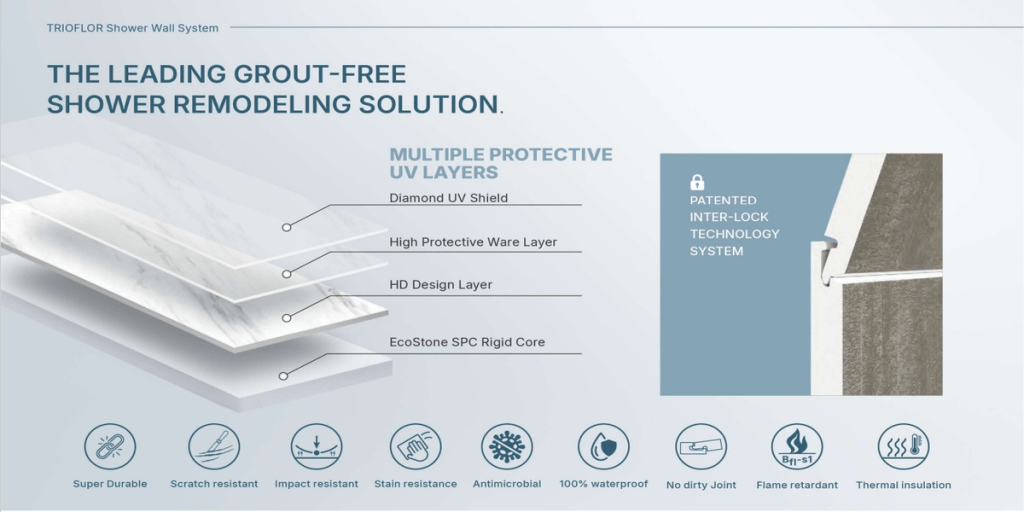
The SPC wall panel is primarily made from PVC and natural stone powder, which are combined under high temperature and high pressure extrusion to form a solid and stable core. The surface is then laminated with a decoration layer through hot pressing, followed by a UV coating treatment to enhance durability, scratch resistance, and long-lasting appearance.
What is Acrylic Wall Panel?
The acrylic wall panel is made from pure polymethyl methacrylate (PMMA) resin, commonly known as acrylic. The material is processed through casting or extrusion, where liquid acrylic is poured into molds or extruded into sheets, then cooled and solidified to achieve a strong, transparent structure. Afterward, the panels undergo polishing and surface finishing to create a high-gloss, smooth appearance with excellent light transmission and decorative effect.
2. Specification
2.1 Thickness
The SPC wall panel has a total thickness of 3.7mm, consisting of a 3.6mm SPC core and a 0.1mm wear layer. In contrast, the acrylic wall panel is much thicker, with a standard thickness of 25mm, giving it a heavier and more solid structure. This difference makes SPC panels lightweight and easier to install, while acrylic panels are bulkier and more rigid.
2.2 Density
The SPC wall panel has a density of only 8kg/m², making it lightweight and easy to handle during installation. In contrast, the acrylic wall panel reaches 30kg/m², which is significantly heavier and requires more effort for transportation and mounting.
2.3 Dimension
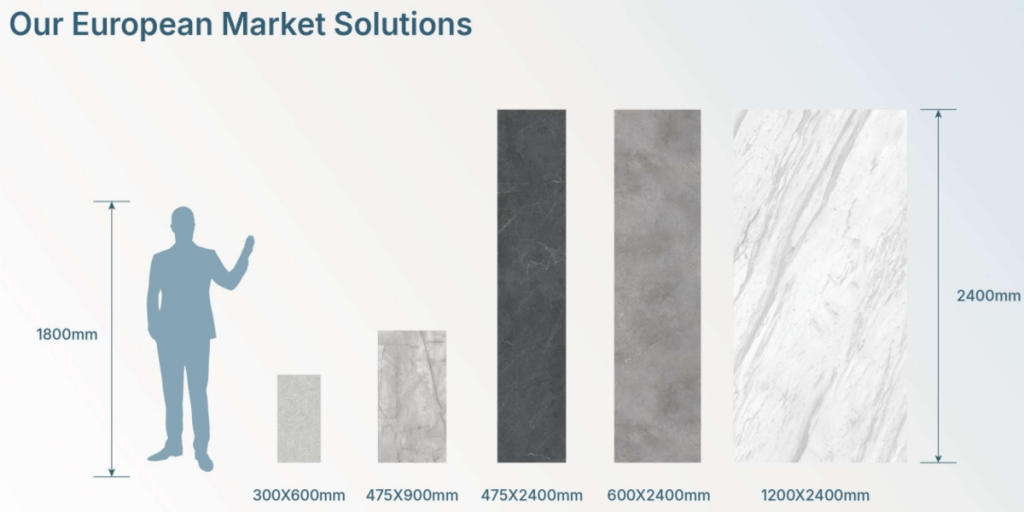
The SPC wall panel comes in a wide variety of sizes, such as 300 × 600mm, 475 × 900mm, 475 × 2440mm, 600 × 2440mm, 900 × 2600mm, and can even be customized to other dimensions. By contrast, the acrylic wall panel is usually available in larger standard sheets of 990 × 2440mm and 1500 × 2440mm.
2.4 Surface Treatment
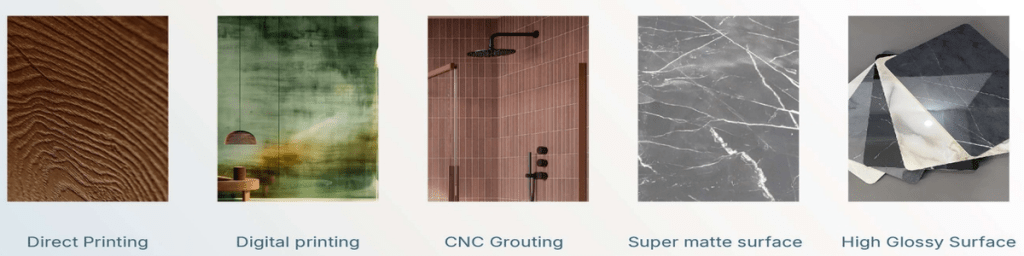
The SPC wall panel offers versatile surface treatments, including decoration layer, 3D printing, CNC routing, and glossy finishes, allowing for diverse design options. In comparison, the acrylic wall panel is limited to a glossy finish only, which restricts its decorative variety.
2.5 Color
The SPC wall panel is available in a wide range of styles, including wood, stone, solid, and brick series, providing more design flexibility. In contrast, the acrylic wall panel is limited to solid colors only, offering fewer decorative options.
3. Function
3.1 Moisture Resistance
Both SPC and acrylic wall panels are treated with a UV coating, which effectively enhances their resistance to moisture. As a result, they both perform well in damp or humid environments, such as bathrooms.
3.2 Waterproof
The SPC wall panel uses a click system, enabling seamless joints that provide excellent waterproofing. In contrast, the acrylic wall panel relies on standard joints, which are weaker in waterproof performance.
3.3 Fire Resistance
The SPC wall panel achieves a Bfl-s1 fire rating under the EN 13501-1 European standard, offering stronger fire resistance. In comparison, the acrylic wall panel only meets the B2 rating under the DIN 4102 German standard, which provides lower fire safety performance.
4. Installation
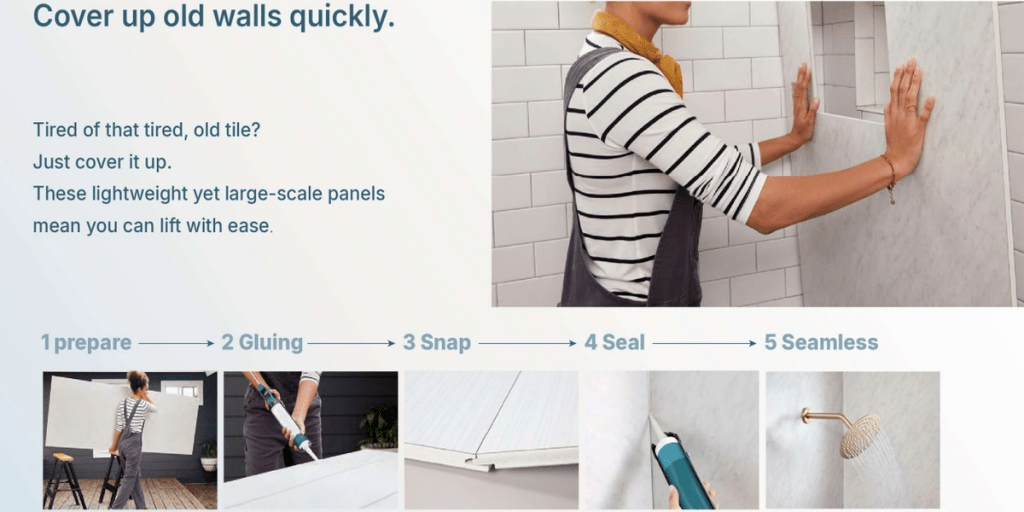
Both SPC and acrylic wall panels can be measured, cut, and drilled using standard woodworking tools, making them convenient to work with. For installation, they can be easily mounted using silicone adhesive and double-sided tape, which allows for simple DIY projects without the need for specialized equipment.
4.1 Installation Efficiency
Both SPC and acrylic wall panels offer much higher installation efficiency compared to traditional ceramic tiles, being around three times faster to install. This makes them a practical choice for projects where time-saving and convenience are important.
4.2 Material Cost
The SPC wall panel has a lower material cost, making it a more budget-friendly option for large-scale projects. In contrast, the acrylic wall panel comes with a higher material cost, which increases the overall investment required.
4.3 Installation Cost
The SPC wall panel not only saves on material expenses but also results in a lower overall installation cost due to its lightweight structure and efficient fitting system. On the other hand, the acrylic wall panel incurs a higher installation cost, as its heavier weight and larger sheet size require more effort and labor.
5. Maintenance
Both SPC and acrylic wall panels are easy to maintain. They can be cleaned using a soft microfiber cloth with warm water and a non-abrasive cleaner, while grease or oil stains can be removed with an appropriate plastic cleaner to keep the surface looking fresh and glossy.
Conclusion
| Category | Item | SPC Wall Panel | Acrylic Wall Panel |
|---|---|---|---|
| Materials and Manufacturing Process | — | PVC + stone powder; high temperature & high pressure extrusion; decoration layer hot-pressed; UV coating. | Pure PMMA resin; casting or extrusion into sheets; polished & surface finished for high gloss. |
| Specification | Thickness | 3.7mm (3.6mm core + 0.1mm wear layer) | 25mm (heavier and more rigid) |
| Density | 8kg/m² (lightweight, easy handling) | 30kg/m² (heavier, harder to transport & mount) | |
| Dimension | 300×600mm, 475×900mm, 475×2440mm, 600×2440mm, 900×2600mm, customizable | 990×2440mm, 1500×2440mm | |
| Surface Treatment | Decoration layer / 3D printing / CNC routing / Glossy | Glossy only | |
| Color | Wood, stone, solid, brick series | Solid colors only | |
| Function | Moisture Resistance | UV coating provides good moisture resistance | UV coating provides good moisture resistance |
| Waterproof | Click system, seamless joints, strong waterproofing | Standard joints, weaker waterproofing | |
| Fire Resistance | Bfl-s1 (EN 13501-1, European standard) | B2 (DIN 4102, German standard) | |
| Installation | Installation Tools & Method | Measured, cut, drilled with woodworking tools; installed with silicone + double-sided tape | Measured, cut, drilled with woodworking tools; installed with silicone + double-sided tape |
| Installation Efficiency | 3× faster than ceramic tiles | 3× faster than ceramic tiles | |
| Material Cost | Lower material cost | Higher material cost | |
| Installation Cost | Lower installation cost due to lightweight & efficiency | Higher installation cost due to heavy weight & large sheets | |
| Maintenance | — | Clean with microfiber cloth, warm water, non-abrasive cleaner | Clean with microfiber cloth, warm water, non-abrasive cleaner |
FAQ
1. Can I repolish my panels?
Yes, liquid plastic polish can be used.
2. Can scratches be removed?
Medium scratches can be removed by manual polishing with smooth circular motion.
3. Which is more suitable: SPC or Acrylic?
SPC wall panels are better for full wall installations. Acrylic wall panels are more suitable for localized decoration.


 SPC Wall Panel
Leave a comment