
In bathroom renovation, waterproofing and moisture resistance are the primary considerations. This is also why SPC wall panels have gradually gained popularity. Compared with traditional tiles or paint, SPC wall panels not only provide practical performance but can also enhance aesthetics through different decorative techniques.
At present, there are two main approaches on the market: decorative film (PVC film) and UV printing. So, in a high-humidity environment like the bathroom, which technique is more suitable?
Decorative Film Process
1. Principle
The decorative film process involves first using gravure printing technology to print patterns such as wood grain, marble, or fabric texture onto a PVC film. After drying and surface treatment, the film is laminated onto the SPC substrate through high-temperature hot pressing.
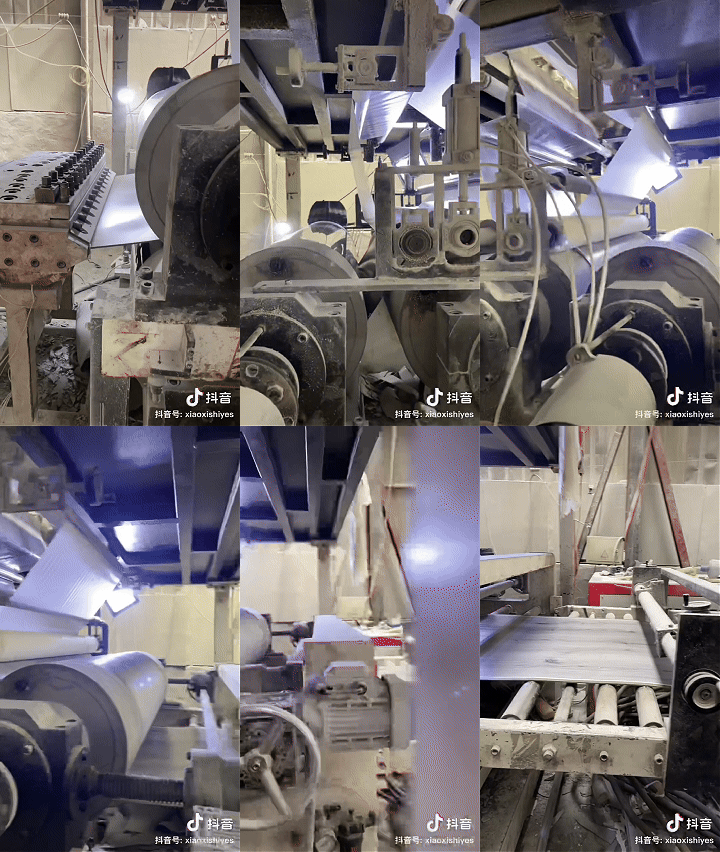
2. Advantages
o Mature pattern options with good batch consistency.
o Lower cost, suitable for mass production.
o Stable process with strong durability.
3. Disadvantages
o Fixed designs with limited flexibility.
o Requires larger minimum order quantities.
o Difficult to achieve 3D textures.
UV Printing Process
1. Principle
UV printing is more like “digital painting.” It uses a UV inkjet printer to directly print designed wood grain, marble, or custom patterns onto the SPC wall panel surface. The ink is then instantly cured by ultraviolet light, ensuring strong adhesion and vibrant colors.
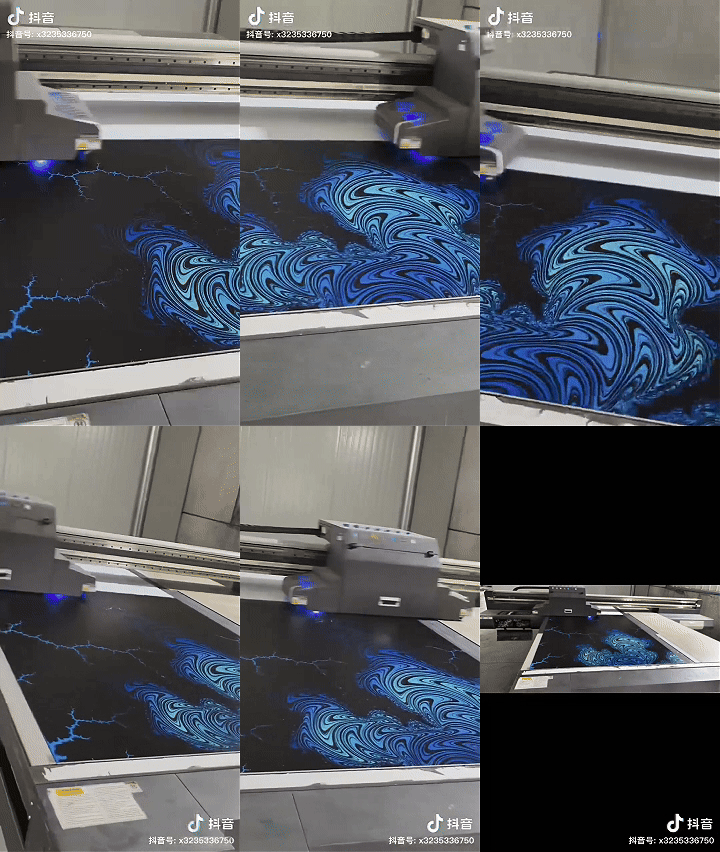
2. Advantages
o High flexibility—patterns can be changed at any time.
o Can achieve 3D textured effects for more realism.
o Suitable for small batches and personalized customization.
3. Disadvantages
o Higher cost.
o Lower production capacity—slower than film lamination.
o Higher technical requirements for equipment and inks.
Comparison Table
| Item | Decorative Film Process | UV Printing Process |
|---|---|---|
| Suitable Scene | Mass production, mainstream designs | Small batch, customized, high-end projects |
| Pattern Options | Mature library, requires printing plates | Any pattern, highly flexible |
| Cost | Lower, suitable for scaling | Higher, suitable for customization |
| Effect | Flat effect, moderate realism | 3D textured effect, more realistic |
| Cycle | Longer (plate-making + production) | Fast turnaround, print on demand |
Conclusion & Recommendations
From an appearance perspective, both techniques deliver similar results, and there is no difference in waterproof performance—decorative film includes a wear-resistant layer, while UV printing adds a UV coating, both of which provide effective water resistance.
The main difference lies in application scenarios: for standardized, large-scale production, the decorative film process is more suitable; for small-batch or high-end customization, UV printing offers greater advantages. In fact, these two processes are not opposites but complementary. Customers can choose the most appropriate solution based on their specific needs and market positioning.

 SPC Wall Panel
Leave a comment