
Fire safety is one of the most important factors when choosing interior wall panels. For SPC wall panels, fire performance mainly depends on fire rating and ignition temperature.
This article explains SPC wall panel fire resistance in a simple way.
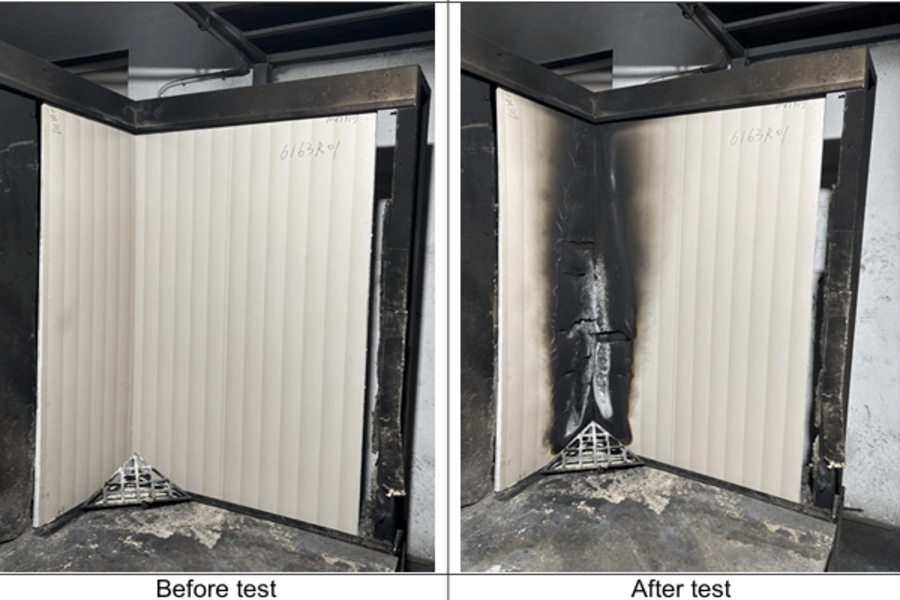
Two Key Factors of SPC Fire Performance
SPC wall panel fire resistance is mainly evaluated by:
1. Fire Rating
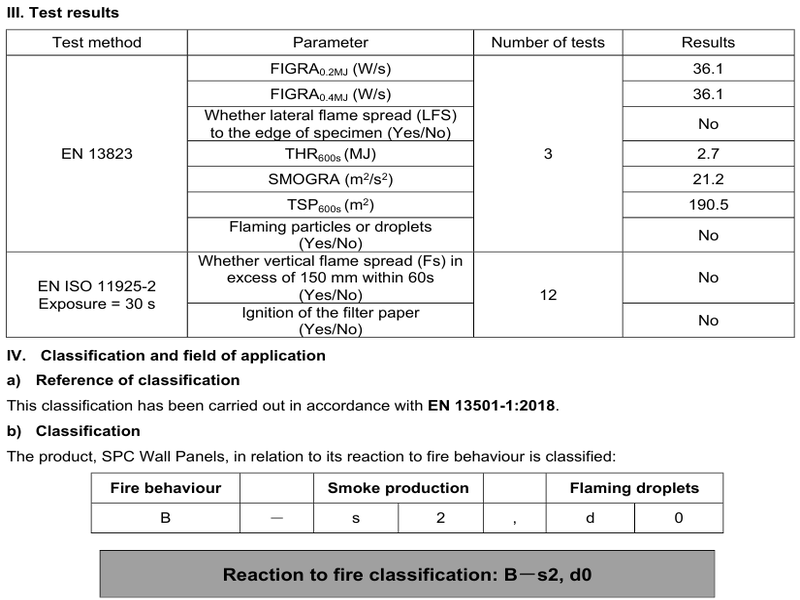
In Europe, wall materials are tested under EN 13501 standard.
Typical SPC wall panel result:
B-s2,d0
Meaning:
- B: Low combustibility
- s2: Medium smoke
- d0: No flaming droplets
Below is the SGS fire rating test report for Trioflor SPC wall panels according to EN 13501 standard.
2. Ignition Temperature
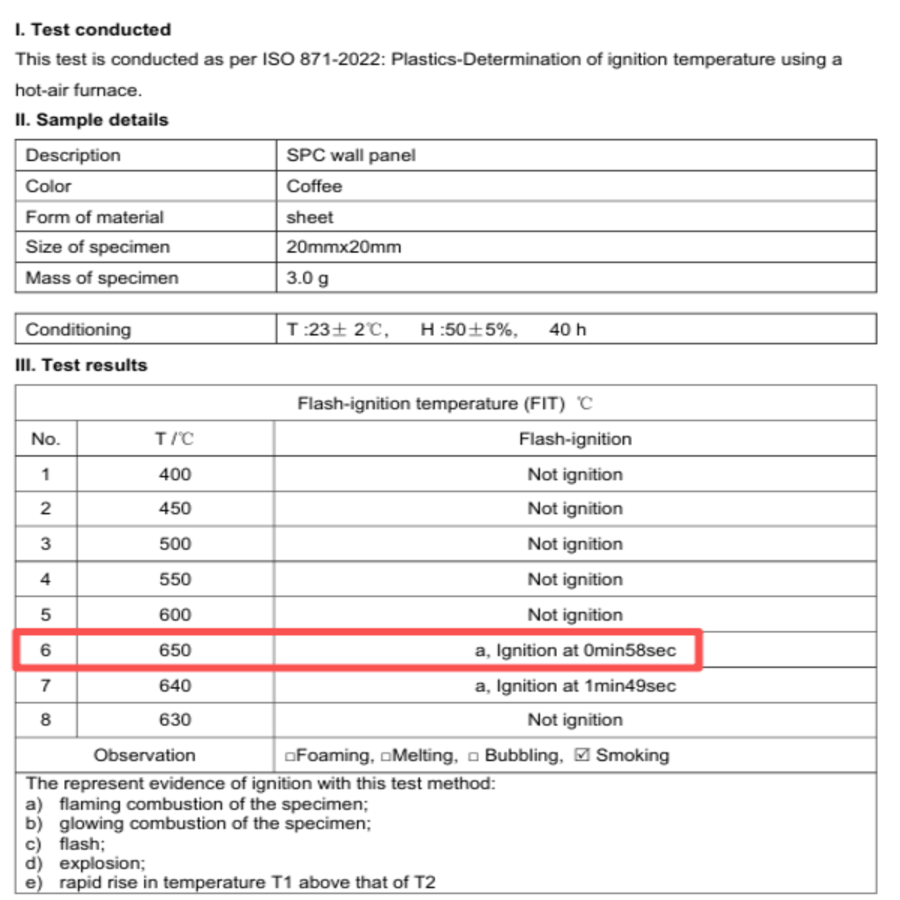
Ignition temperature means the heat level at which a material starts burning.
Test result for SPC wall panels:
👉 Up to 650°C
This shows high heat resistance and good fire safety. Below is the ignition temperature test report of Trioflor SPC wall panels.
Fire Performance Comparison
To better illustrate the fire performance of different interior wall materials, Trioflor have compared their ignition temperatures and fire resistance levels. The results show that SPC wall panels perform significantly better than PVC, WPC, and bamboo fiber panels, and are second only to aluminum panels, making them a reliable and safe choice for interior decoration projects.
| Material | Ignition Temp. | Fire Level |
|---|---|---|
| PVC Panel | ≈ 390°C | Medium |
| WPC Panel | ≈ 280°C | Low |
| SPC Wall Panel | ≈ 650°C | High |
| Aluminum Panel | > 660°C | Very High |
| Bamboo Fiber Panel | ≈ 260°C | Low |
Conclusion
SPC wall panels show good fire resistance with:
- EN 13501: B-s2,d0
- Ignition temperature: up to 650°C
Compared with PVC, WPC, and bamboo fiber panels, SPC offers better fire safety.

 SPC Wall Panel
Leave a comment