
SPC wall panels come in thicknesses from 3mm to 8mm, but not all are practical. Panels that are too thin break easily, while thicker ones are heavy and costly. That’s why 3.7mm is the ideal thickness, offering the best balance of strength, lightness, cost-efficiency, and easy installation.
Common Thickness and Issues of SPC Wall Panels
The thickness of SPC wall panels available on the market generally ranges from 3–8mm. Different thicknesses directly affect user experience, installation convenience, and overall cost, making the choice of thickness highly important.
If the thickness is too thin (less than 3.5mm), the panel becomes fragile and prone to cracking. In addition, thin boards do not provide enough locking strength, which may easily cause the click system to break during installation, reducing durability and negatively impacting customer experience.
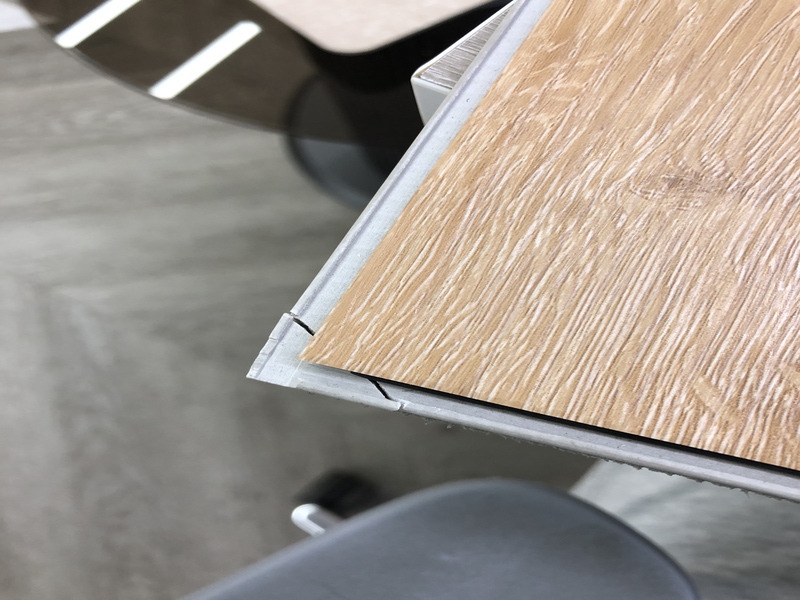
On the other hand, if the thickness is too thick (more than 4mm), although strength may increase, it creates new problems. The extra weight makes handling and installation more difficult, and the higher material consumption drives up both production and transportation costs, adding unnecessary burden for both manufacturers and customers.

Core Functions of SPC Wall Panels
The core functions of SPC wall panels are waterproofing and decoration. They are mainly used in applications such as bathroom wall coverings and interior decoration, rather than bearing structural loads or pressure. Therefore, they do not require excessively thick material support like load-bearing components.
In fact, once the thickness exceeds 4mm, the added weight and cost do not bring extra functional value. Instead, they make handling and installation more inconvenient. In other words, an overly thick design is a waste of resources, increasing production costs while reducing market competitiveness. Choosing a reasonable thickness that ensures both strength and stability within an optimal range is the correct direction for SPC wall panel design.
Why 3.7mm is the Optimal Choice
1. Balance of Strength and Lightness
At 3.7mm, SPC wall panels achieve an ideal balance between light weight and durability. Through Trioflor’s special manufacturing process, even though the thickness is slightly less than 4mm, the locking system remains strong and resistant to breakage. The material maintains sufficient flexibility, ensuring the panels do not easily crack during installation or daily use. This optimization guarantees sturdiness while keeping the product lightweight and user-friendly.
2. Reduced Weight and Cost
Compared with traditional 4mm panels, 3.7mm SPC wall panels are lighter, making handling and installation much easier and more efficient. The reduced thickness lowers raw material consumption, thereby cutting production costs without sacrificing performance. For customers, this means they receive the same quality and performance at a more competitive price, significantly improving overall value for money.
3. Strong Installation Compatibility
The 3.7mm design also provides clear advantages in installation. Most mainstream accessories on the market (such as trims and locking profiles) are designed with an internal clearance of 4mm. The 3.7mm thickness fits perfectly, leaving a small allowance that makes installation easier and avoids problems caused by overly tight or loose fitting. For installers, this ensures a secure fit while greatly enhancing convenience and efficiency on site.
Conclusion
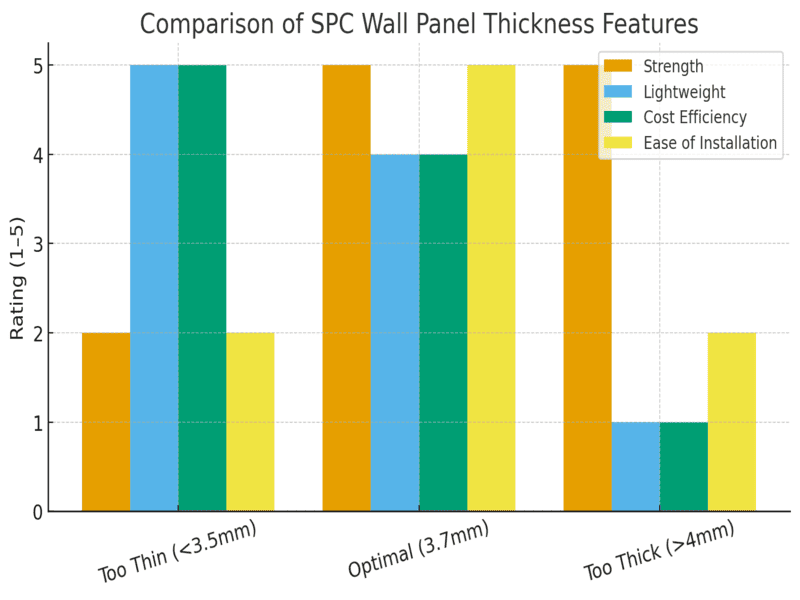
If SPC wall panels are too thin, they become fragile and the locking system loses durability, making them unreliable in long-term use. If they are too thick, the extra strength comes at the cost of excessive weight, inconvenient handling, and higher expenses.
In contrast, the 3.7mm thickness strikes the perfect balance: it ensures locking strength and durability, keeps the product lightweight and easy to install, reduces raw material use and production costs, and perfectly matches existing mainstream accessories. In short, 3.7mm combines strength, lightness, cost-efficiency, and installation convenience, making it the optimal thickness for SPC wall panels.


 SPC Wall Panel
Leave a reply to Locking Systems of SPC Wall Panels – SPC Wall Panel Cancel reply